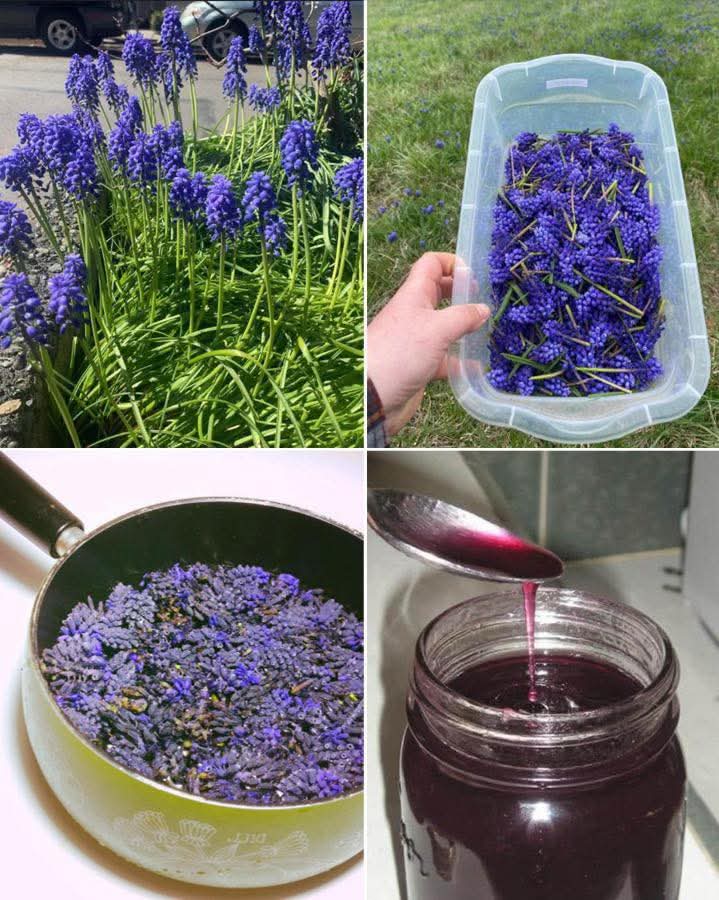
When spring arrives, grape hyacinths burst forth like clusters of deep blue or purple pearls carpeting lawns and gardens. While admired for their ornamental beauty, few people know that these charming little flowers also offer surprising traditional uses and health-related benefits. Let’s dive into what makes the Muscari genus so fascinating — beyond the flower bed!
The grape hyacinth is a perennial bulb plant native to the Mediterranean and parts of Asia. Belonging to the Muscari genus, it resembles tiny bunches of grapes growing on a short stalk, hence the name. It’s often confused with true hyacinths but is actually more closely related to other bulbous spring bloomers like squill and lily of the valley.
Traditional and Natural Uses
1.Digestive Aid (in folk medicine)
In Mediterranean folk traditions, certain Muscari species like Muscari comosum (also known as tassel hyacinth) were harvested for their bulbs, which were cooked and eaten.
These bulbs were thought to have mild laxative and digestive-stimulating effects.
2.Detox and Diuretic Properties
Boiled bulbs were traditionally consumed to stimulate kidney function and flush excess fluids — a natural remedy for mild water retention.