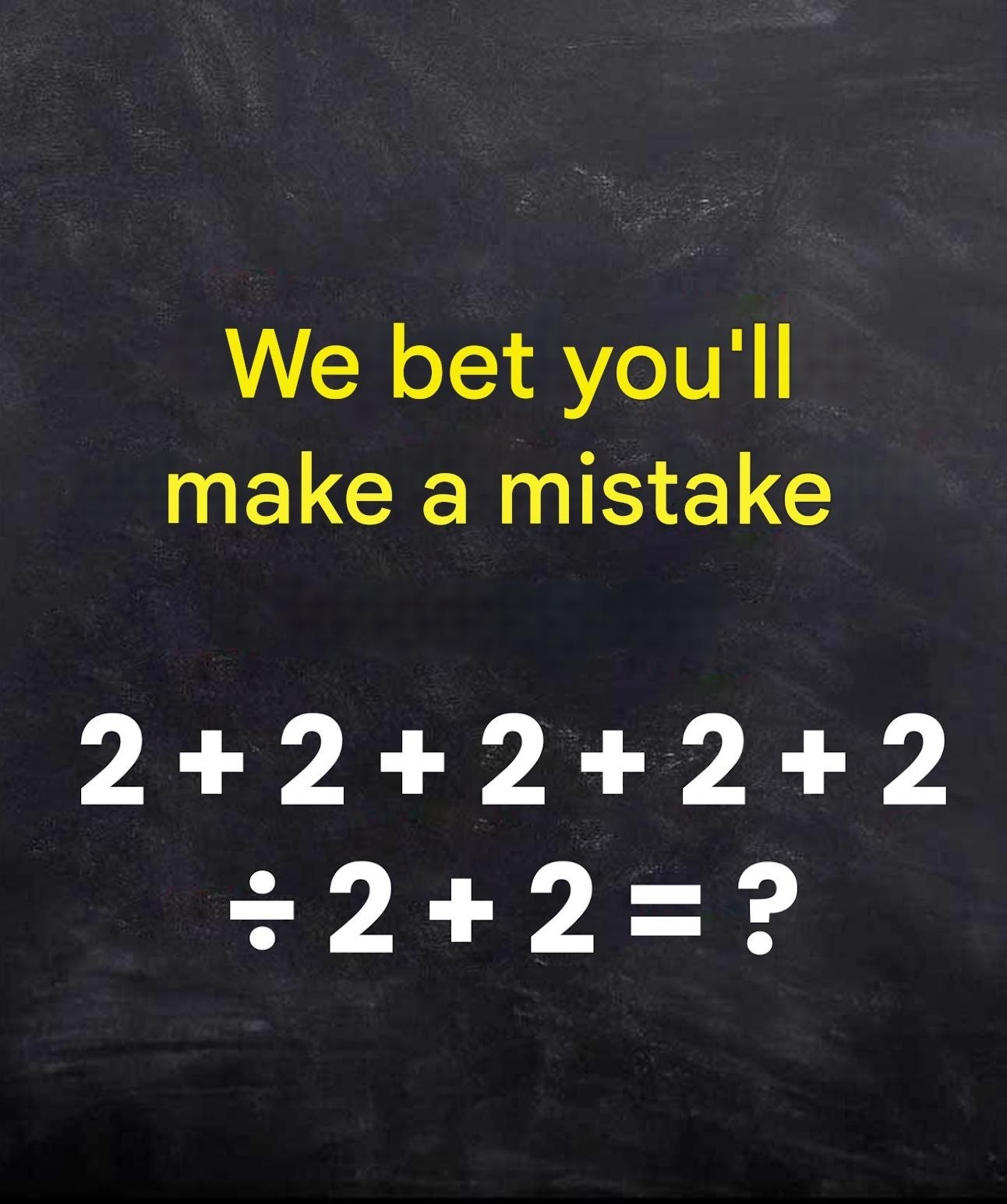
99% of People Are Wrong About This Problem – Can You Solve It?
Every so often, a puzzle or challenge emerges that baffles the majority of people, ignites debates online, and makes you question what you thought you knew. These problems aren’t just brain teasers—they expose how our minds work, why we make assumptions, and why most people arrive at the wrong answer.
Today, we’re diving into one of those notorious problems that claims to fool 99% of people. But before we reveal the “solution,” we’re going to explore why it’s so tricky, what cognitive biases it exploits, and how you can train your brain to think differently.
Why Most People Get It Wrong
At first glance, the problem seems simple. That’s the trap. The human brain is wired to look for familiar patterns, quick shortcuts, and immediate answers. While this “fast thinking” helps us in daily life, it often fails in puzzles designed to subvert expectations.
Some reasons people get the problem wrong include:
Assumptions Without Evidence
We tend to fill in gaps in information with what seems logical, even when the problem doesn’t state it. For example, if a puzzle mentions “two people enter a room,” we instinctively imagine two adults, though the puzzle may allow other interpretations.
Overcomplicating Simple Problems
Many people overthink these challenges, assuming the solution must involve complex math or logic. Often, the answer is deceptively simple.
Cognitive Biases at Play
Confirmation Bias: Looking for answers that fit pre-existing assumptions.
Anchoring: Relying too heavily on the first piece of information you see.
Framing Effect: Interpreting the problem based on how it’s presented, rather than objectively.
Rushing for the Answer
The pressure to solve the puzzle quickly can lead to snap judgments, which is exactly what these problems exploit.
The Problem That Stumps 99% of People
Here’s a classic example of a problem that consistently fools people:
Problem:
A bat and a ball cost $1.10 in total. The bat costs $1 more than the ball. How much does the ball cost?
Take a moment and think about it. What’s your answer?
If you said 10 cents, you’re not alone—this is the answer most people give instinctively. But it’s actually wrong.
Breaking Down the Correct Solution
Here’s how to solve it correctly:
Let x be the cost of the ball.
Then the bat costs x + $1.00.
The total cost is x + (x + $1.00) = $1.10.
Combine terms:
2x + $1.00 = $1.10
2x = $1.10 – $1.00
2x = $0.10
x = $0.05
So the ball costs 5 cents, and the bat costs $1.05.
The 10-cent answer is almost automatic—your brain jumps to the easy arithmetic without carefully verifying the relationships. This is a perfect example of how fast thinking can lead you astray.
Why This Puzzle Works
This problem has several qualities that trick nearly everyone:
It’s Simple Yet Misleading
The numbers are round and familiar ($1, 10 cents), so your brain assumes the simplest arithmetic works.
It Exploits System 1 Thinking
According to psychologist Daniel Kahneman, humans have two thinking systems:
System 1: Fast, automatic, intuitive
System 2: Slow, deliberate, analytical
Most people answer “10 cents” using System 1. Checking the work with System 2 requires deliberate effort, which many skip.
It Highlights Cognitive Biases
People overlook details in favor of immediate, “obvious” conclusions.