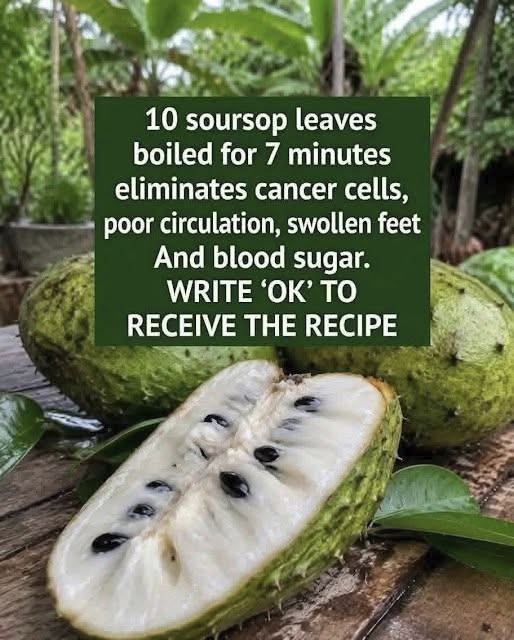
Soursop leaf tea is not risk-free, especially with long-term or high-dose use.
For Complete Cooking STEPS Please Head On Over To Next Page Or Open button (>) and don’t forget to SHARE with your Facebook friends
1. Neurotoxicity Risk: Soursop contains annonacin, a compound linked in some studies to atypical Parkinson-like symptoms with long-term, heavy consumption. This was observed in regions where soursop is eaten daily in large amounts over years. Occasional tea is different from daily heavy use for months. Do not drink it every day for long periods.
2. Blood Sugar and Blood Pressure: Soursop may lower blood sugar and blood pressure. If you take medication for diabetes or hypertension, this can cause your levels to drop too low. Talk to your doctor first.
3. Pregnancy and Breastfeeding: Do not use soursop leaf tea if you are pregnant or breastfeeding. There is not enough safety data.
4. Liver and Kidney Conditions: Avoid if you have liver or kidney disease, unless cleared by your doctor.
5. Drug Interactions: It may interact with blood pressure drugs, diabetes drugs, sedatives, and antidepressants. Always check with your pharmacist or doctor before combining herbal teas with prescription medication.
6. Seeds Are Toxic: Never eat soursop seeds. They are not used in tea. Only use the leaves, and only from a reputable source.
A safe approach used in traditional practice is to drink it for short periods, such as 1 cup a day for 1 to 2 weeks, then take a long break. Do not use it continuously for months.
How to Buy and Store Soursop Leaves
Buy dried, organic soursop leaves from a reputable herbal supplier. Leaves should be whole, green-brown, and smell earthy, not moldy. Store in an airtight glass jar away from light and moisture. They keep for about 12 months.