—
### **3. Be Gentle With Your Skin**
Until you understand what’s happening:
* Avoid leaning your body weight on arms or legs
* Use padding or soft clothing when possible
* Be cautious with massage, deep pressure, or aggressive stretching
This isn’t permanent—it’s just protective for now.
—
### **4. Focus on Balanced Nutrition**
Without self-treating or megadosing:
* Eat a variety of fruits and vegetables
* Include protein and iron-rich foods if possible
* Stay hydrated
Avoid starting high-dose supplements unless advised by a healthcare professional.
—
### **5. Manage Stress (More Important Than It Sounds)**
Chronic stress can affect hormones, circulation, and immune responses.
Even simple steps—better sleep, breathing exercises, gentle walks—can reduce physiological strain while you wait.
—
## **What NOT to Do Right Now**
* ❌ Don’t google worst-case scenarios late at night
* ❌ Don’t self-diagnose blood disorders
* ❌ Don’t stop prescribed medication without guidance
* ❌ Don’t ignore changes entirely
Balanced awareness is the goal—not panic, and not denial.
—
## **Red Flags: When You Should Seek Care Sooner**
While most cases of easy bruising are not emergencies, **some symptoms should not wait weeks**.
Seek urgent medical care **now** (urgent care or emergency services) if you notice:
* Bruising along with **unusual bleeding** (nose, gums, urine, stool)
* **Sudden, widespread bruising** without explanation
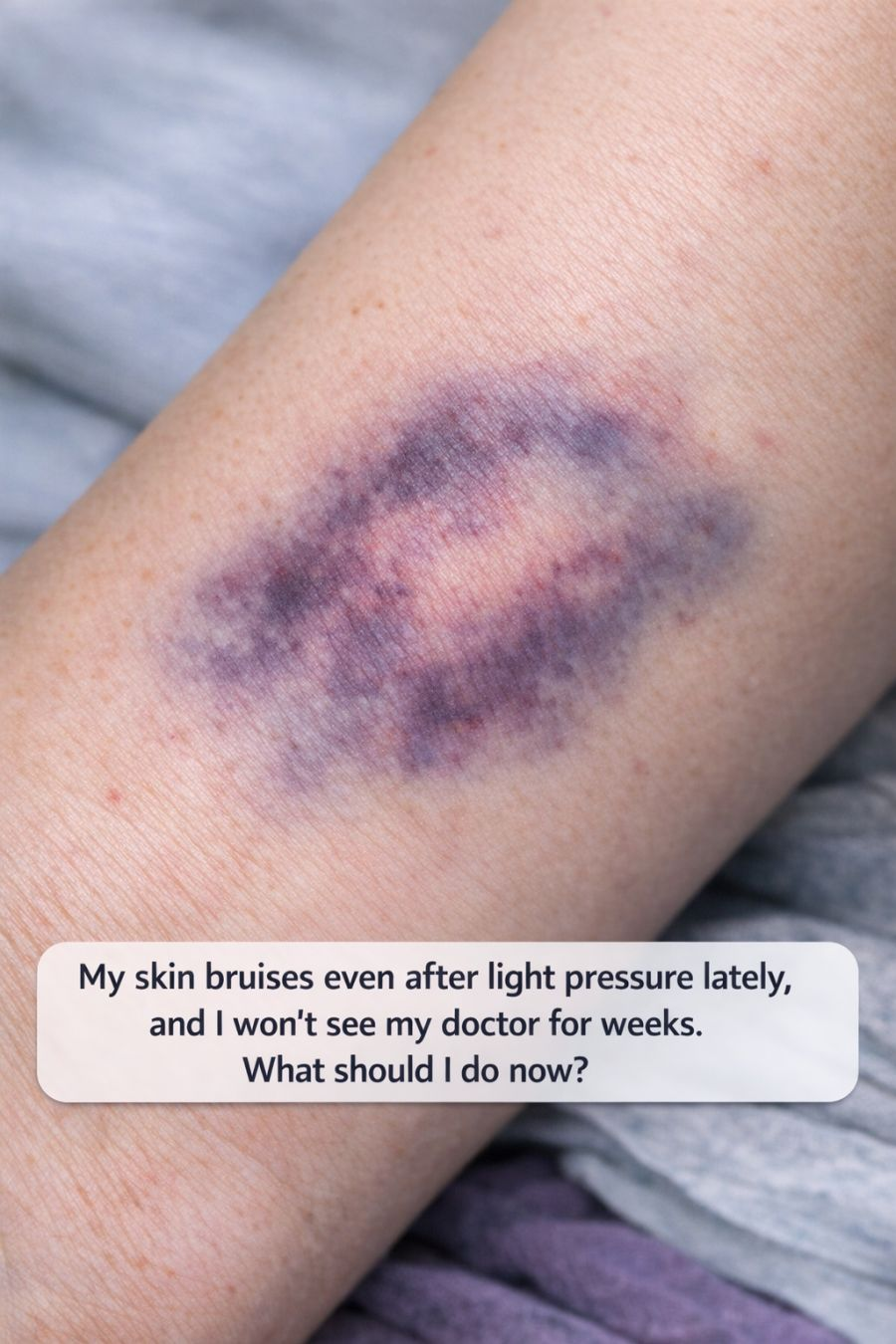
* Bruises that are **very large, painful, or rapidly worsening**
* **Extreme fatigue, dizziness, or shortness of breath**
* Fever, night sweats, or unexplained weight loss
* New bruising combined with **recent illness or infection**
* Bruising after **no pressure at all**, appearing overnight
These don’t automatically mean something serious—but they *do* need prompt evaluation.
—
## **How to Prepare for Your Doctor Visit**
When your appointment comes, preparation can make a big difference.
Bring:
* Your bruising log
* Medication and supplement list
* Photos of bruises (especially if they fade before the visit)
* Notes on other symptoms, even if they seem unrelated
Good questions to ask:
* “What could be contributing to this change?”
* “Are there tests that would help clarify what’s going on?”
* “Is this something to monitor or treat right away?”
Doctors rely on **patterns and context**—you’re helping them help you.
—
## **The Emotional Side of Waiting**
Waiting weeks for a medical appointment while your body does something unfamiliar can be mentally exhausting.
You may feel:
* Hyper-aware of your body
* Anxious every time you see a new mark
* Frustrated by the lack of immediate answers
That doesn’t mean you’re overreacting.
It means you’re human.
Try to stay grounded in what you know:
* You noticed a change 
* You’re paying attention
* You have a plan
Those are powerful steps.
—
## **A Reassuring Perspective**
Many people who experience sudden easy bruising later learn there was a **manageable, reversible explanation**—something nutritional, medication-related, or temporary.
The body changes. Sometimes quietly. Sometimes visibly.
The fact that you noticed and are asking what to do *now* already puts you in a strong position.
—
## **Final Thoughts: Stay Observant, Not Afraid**
You don’t need to solve this today.
You don’t need to diagnose yourself.
What you need to do is exactly what you’re already doing:
* Pay attention
* Protect yourself
* Prepare for professional care
* Know when to seek help sooner
Your skin is sending you information—not a verdict.
And answers are coming.
—
If you’d like, I can:
* Rewrite this in a **shorter viral article style**
* Turn it into a **FAQ format**
* Adapt it for **social media, Medium, or health blogs**
* Help you create a **doctor-visit checklist**
Just tell me how you plan to use it