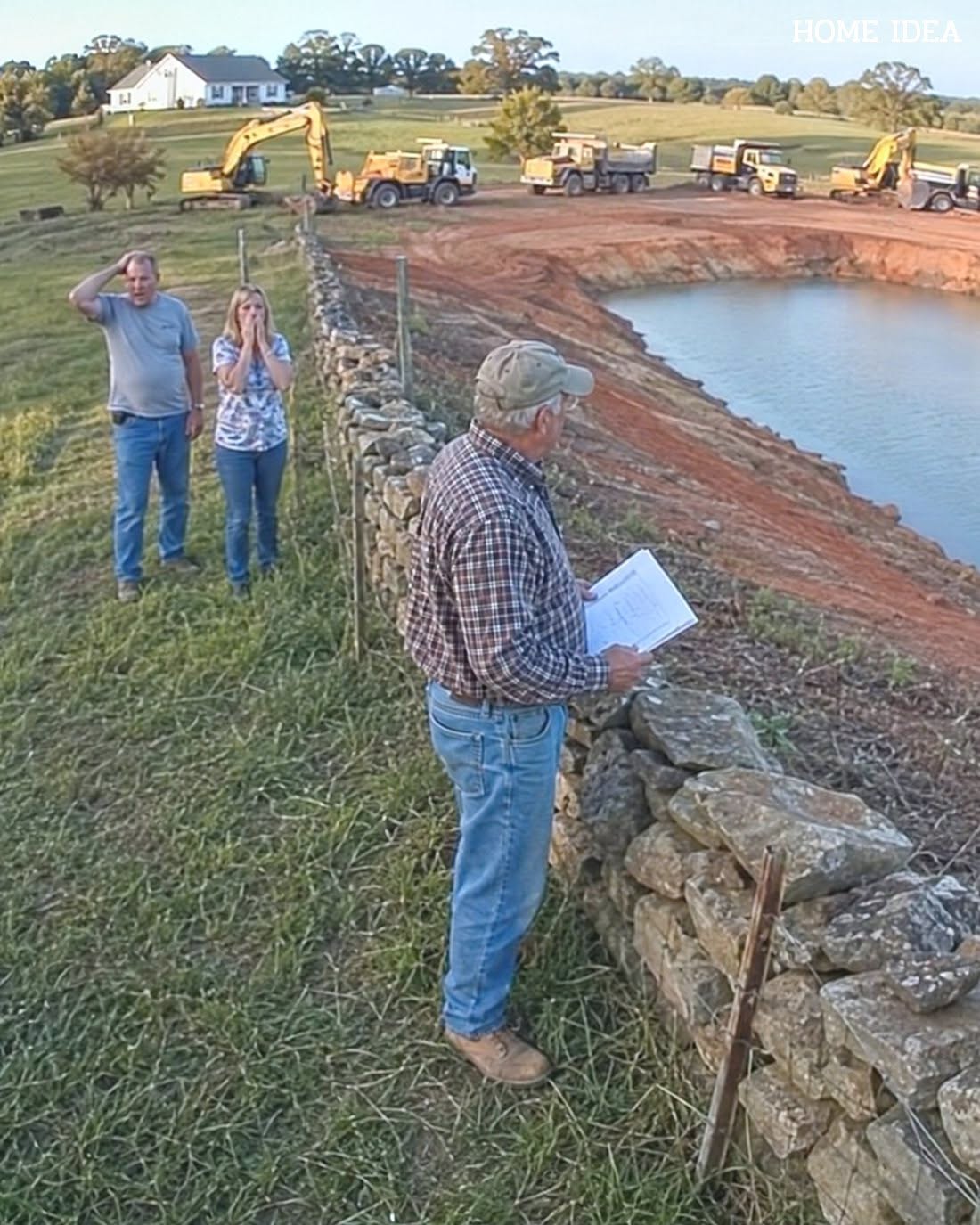
No contractors. No landscapers. No side-by-sides creeping along the boundary. Just raw earth drying in the sun and the spring finding itself again. I knew better than to trust it completely. Pride does not drain like water. It seeps into other places.
Ten days later, I was served papers.
Brent and Laurel sued me for destruction of private property, loss of investment, emotional distress, and malicious interference with land enjoyment. That last phrase made Caleb laugh so hard he had to sit down.
“Malicious interference with land enjoyment,” he read aloud at my kitchen table. “On your land.”
“Apparently.”
“Can I maliciously enjoy a sandwich in your kitchen and sue you if you take it back?”
“Ask Ruth Ann.”
Ruth Ann did not laugh when she reviewed it. “They’re throwing everything at the wall.”
“Anything stick?”
“The mud, maybe.”
The second hearing happened six weeks later in the same courtroom with the same judge. Brent looked thinner. Laurel looked at the table. Their attorney argued they had intended to appeal, that I acted aggressively, that restoration should have been paused, that the lake was a good-faith improvement made under professional guidance.
Judge Porter let him go on for about four minutes.
“Did your clients file an appeal?”
“No, Your Honor.”
“Did they request a stay?”
“No, Your Honor.”
“Did the order authorize Mr. Mercer to restore the property at their expense if your clients failed to comply within twenty-one days?”
“Yes, but—”
“Then I am not sure why we are here.”
Their suit was dismissed before lunch.

But by then, the matter had grown teeth in the other direction. Harold documented timber loss, spring diversion damage, silt buildup downstream, soil disturbance, and restoration costs. Ruth Ann submitted our claim. The court awarded survey fees, filing costs, restoration expenses, and just under ten thousand dollars in environmental remediation and timber damages. It did not make me rich. It did not even cover the aggravation. But it said, in the dry language of law, that what had been done to my land mattered.
When the judge read the number, Brent’s shoulders dropped.
For the first time, I felt something close to pity.
Not enough to regret anything. But enough to see him as smaller than the problem he created. He was not a villain in a black hat. He was a man accustomed to the world bending around money and momentum, and he had mistaken that habit for reality. Laurel, too, had built a dream on a false line and then loved the dream more than the truth.
Outside the courthouse, Brent stopped me one last time.
“You could have worked with us,” he said.
There was no heat in it now. Just fatigue.
“You never tried to work with me,” I said. “You tried to outspend me.”
He looked like he wanted to argue, then realized he had no clean place to stand.
The Whitakers listed the property the following spring.
Rural counties have their own newspapers, even when nothing is printed. Feed stores, barbershops, church parking lots, county offices, diners, hardware stores—word moves through all of them faster than any formal notice. By the time their retreat property hit the market, everybody knew about the lake that came and went. Prospective buyers asked about drainage, legal disputes, neighbors, boundary lines, and whether the stone fence was “the famous fence,” which made me laugh the first time Ruth Ann told me.
The property sat for months.
When it finally sold, it went for less than they paid.
I do not know how much they lost, and I never tried to find out. I did not want them ruined. Ruin was not the point. Respect was. A boundary is not meaningful because it destroys people who cross it. It is meaningful because it still stands after they try.
The new owners came by the week after closing. Retired couple from Birmingham. Tom and Elaine Bowers. He had worked for the power company. She had taught high school English for thirty-two years and had the posture of a woman who could silence a room with one raised eyebrow. They brought a pecan pie and introduced themselves on my porch like people used to do more often.
Tom shook my hand. “We’ve heard about the fence.”
I smiled. “It’s a good fence.”
“We don’t plan on testing it.”
Recent Articles

This young policewoman was filmed after her shift…see more
I Returned Home After 10 Years With the Son They Tried to Erase….See more

The 7 kilo baby who amazed the world in 1983: this is how it looks today, at the age of 40…..See more